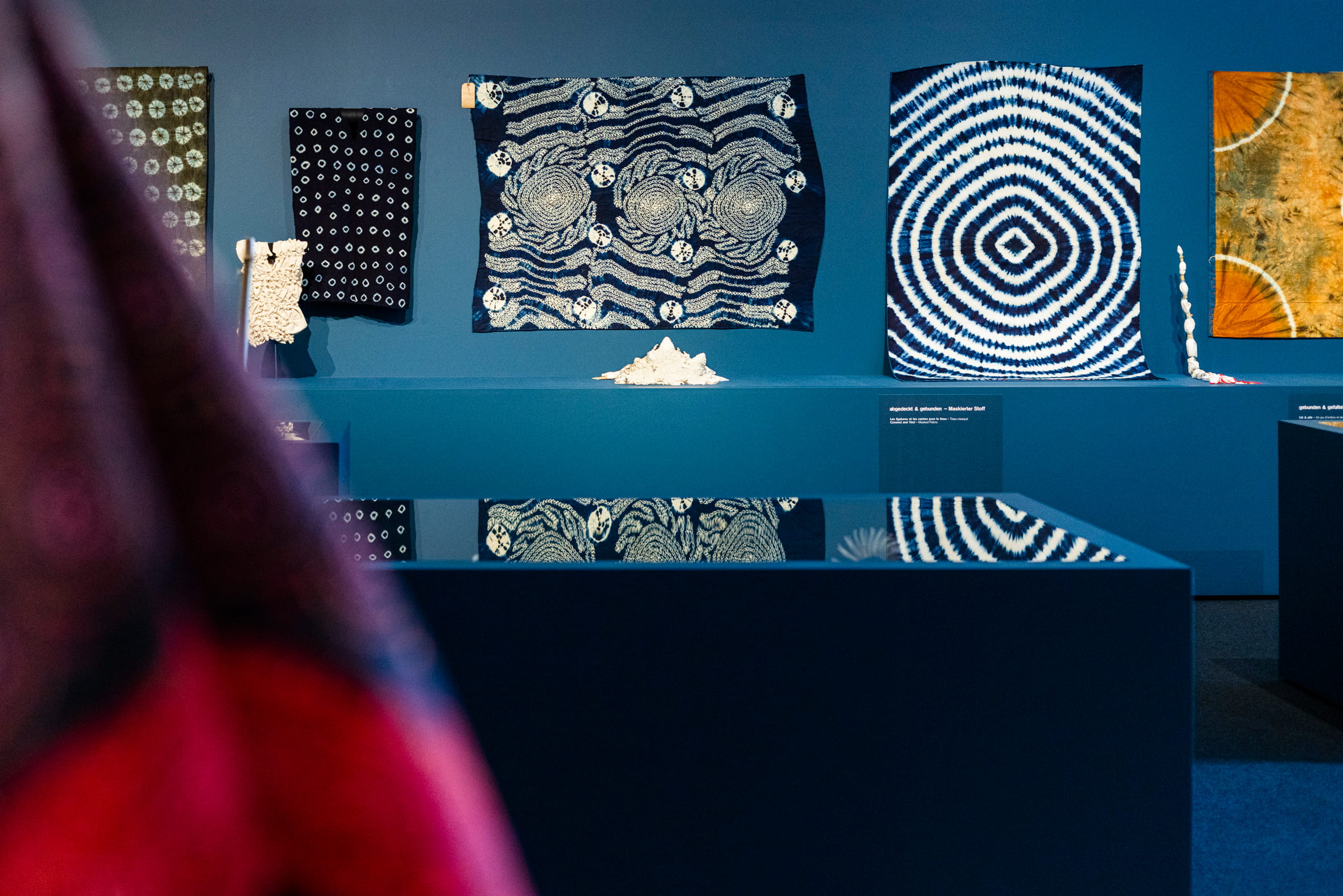
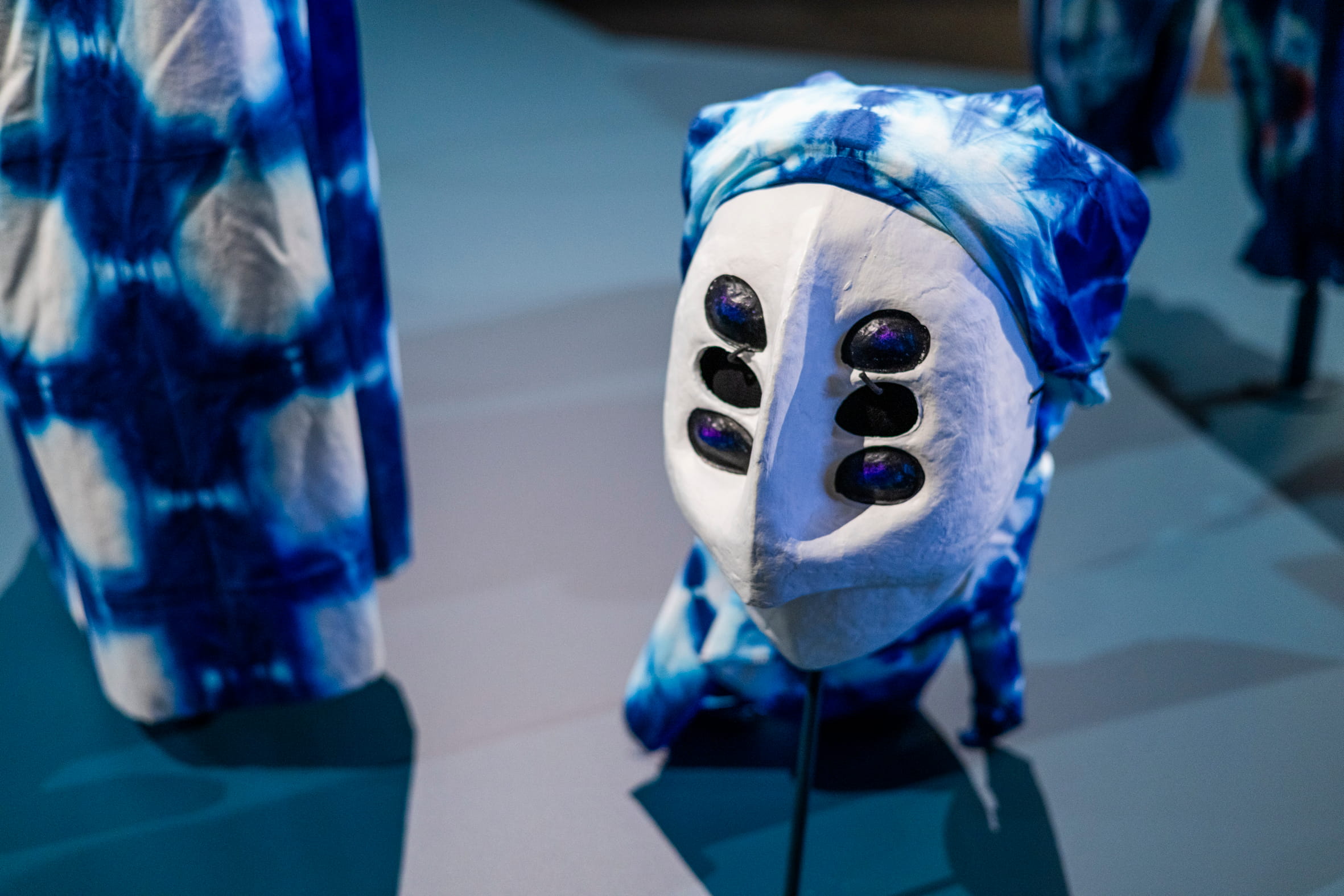
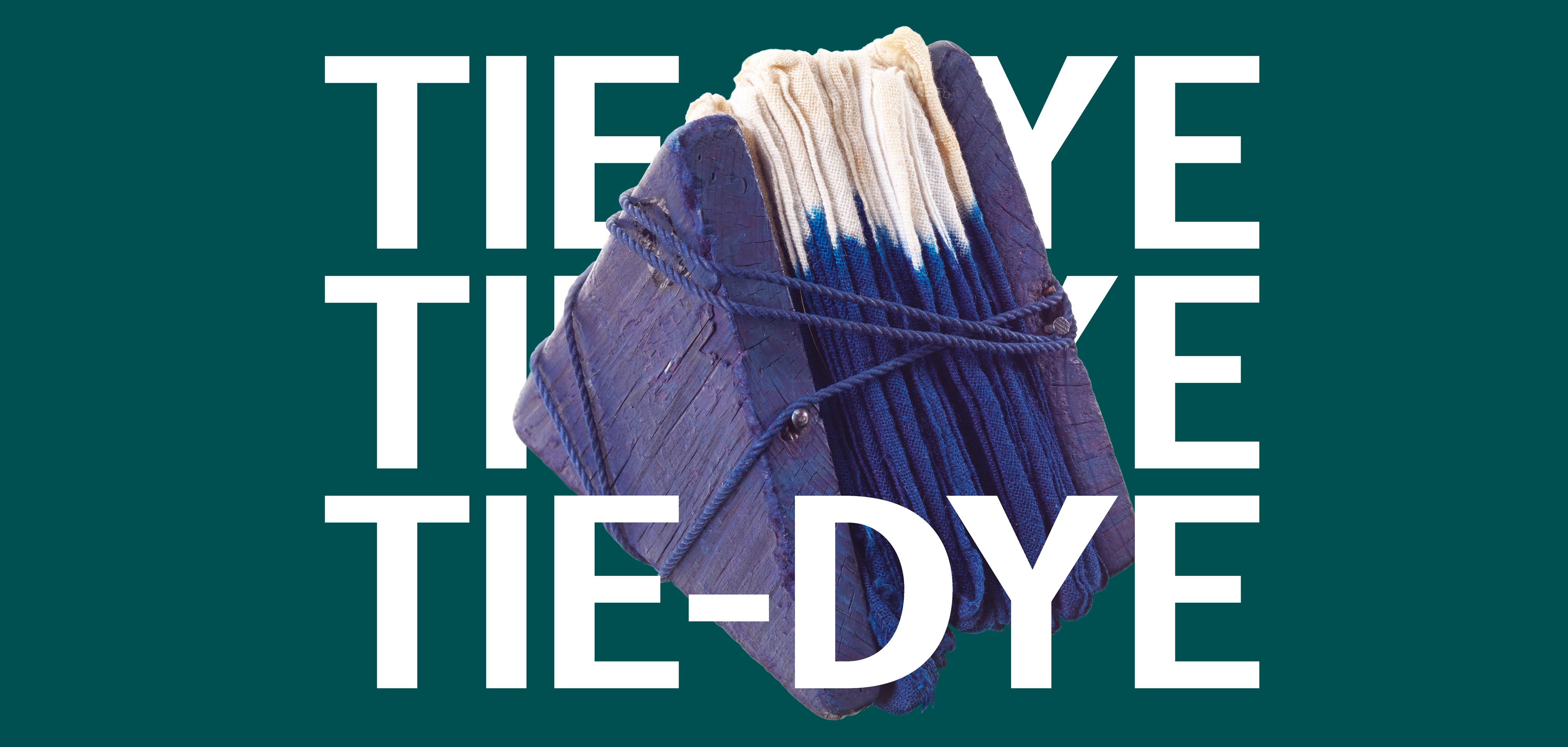
Our new textile exhibition centres on the technique of tie-dye. The exhibits reveal how patterns are created by tying, stitching or folding fabric – step by step and explained in detail. The show is based on the MKB’s own textile collection. Moreover, visitors are invited to get creative themselves.
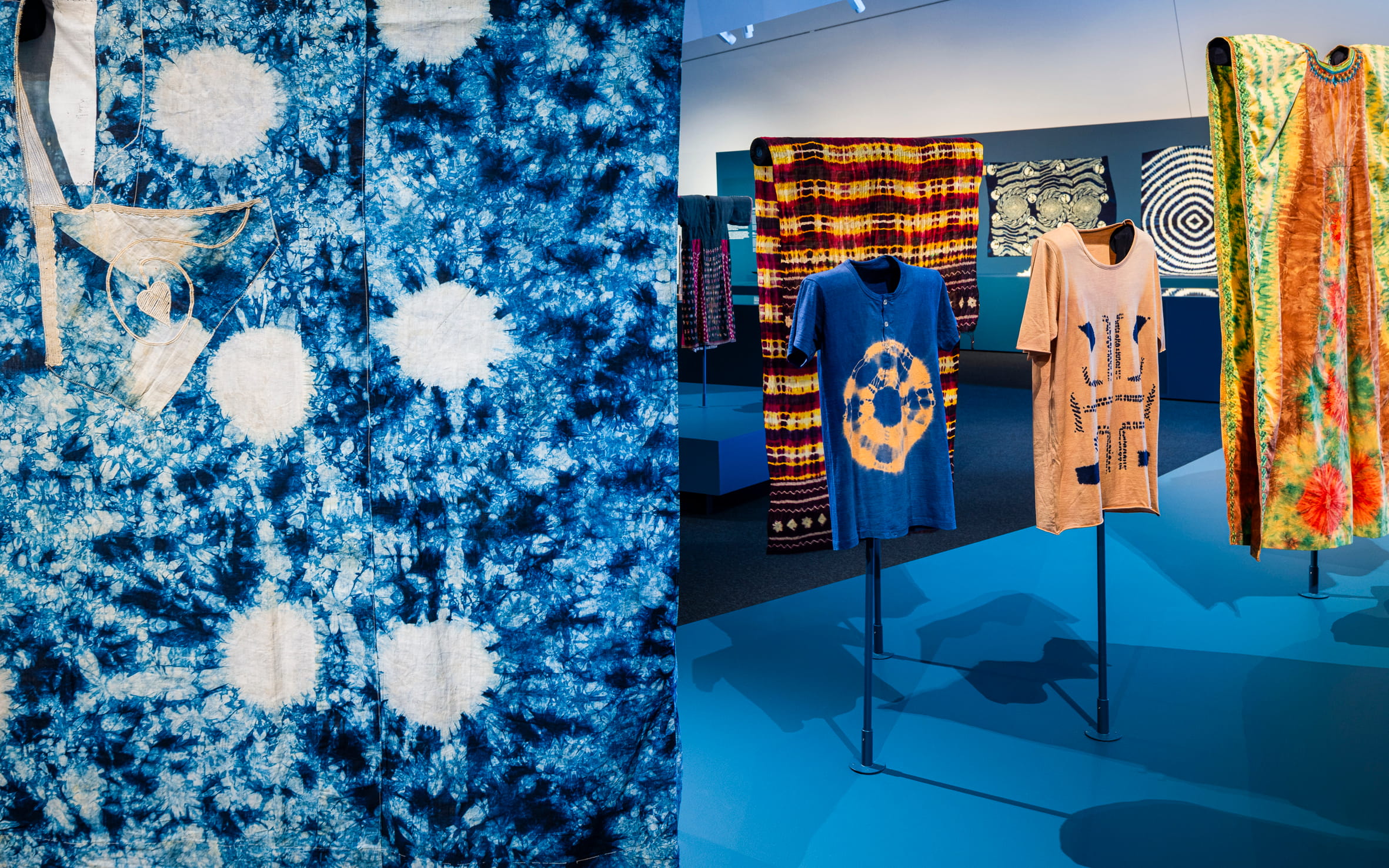
The catwalk in the exhibition doesn’t feature glamorous models in luxury designer wear, but ornately patterned pieces of clothing instead. It takes centre stage in the exhibition ‘Tie-dye: Folded, Stitched, Coloured’.
The kimonos, children’s clothes, cloths, and shoes undoubtedly deserve our admiration, but key to the show are the displays surrounding the catwalk. They explain step by step how the patterns on the fabrics are designed and crafted.
The new exhibition is all about craftsmanship, says the curator Stephanie Lovász: it takes time, a great deal of experience, knowledge, imagination, skill, and a little maths.
Uniquely Three-dimensional
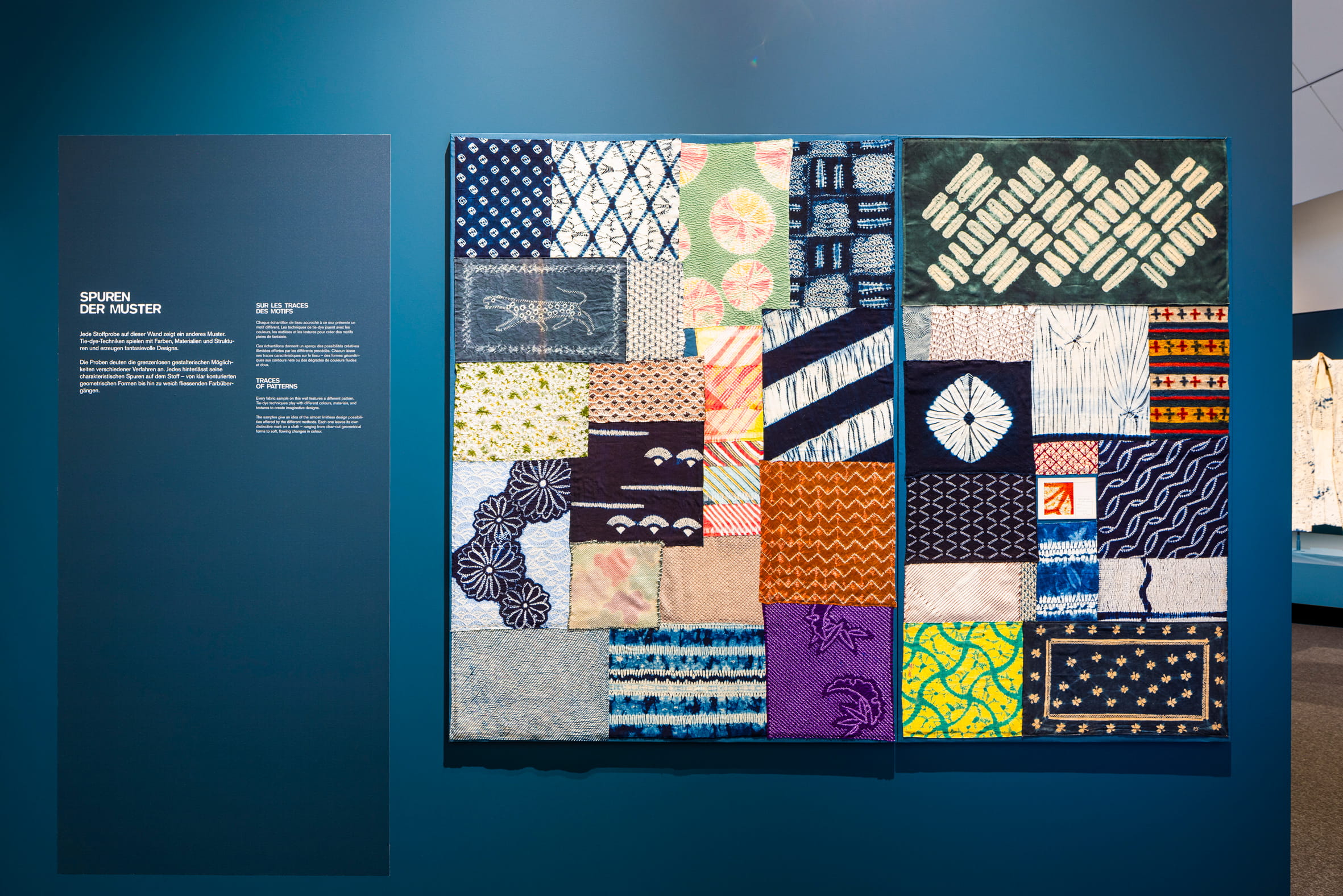
The curator’s fascination for tie-dye is borne out by every fibre and each of the approximately 250 exhibits. However, tie-dye is merely an umbrella term for an array of different techniques.
Japanese shibori is one of the best-known techniques; others include plangi, bāndhanī, tritik, and adire which are practised in Asia, South America, Europe, and Africa, respectively. They highlight the global nature of the museum’s textile collection.
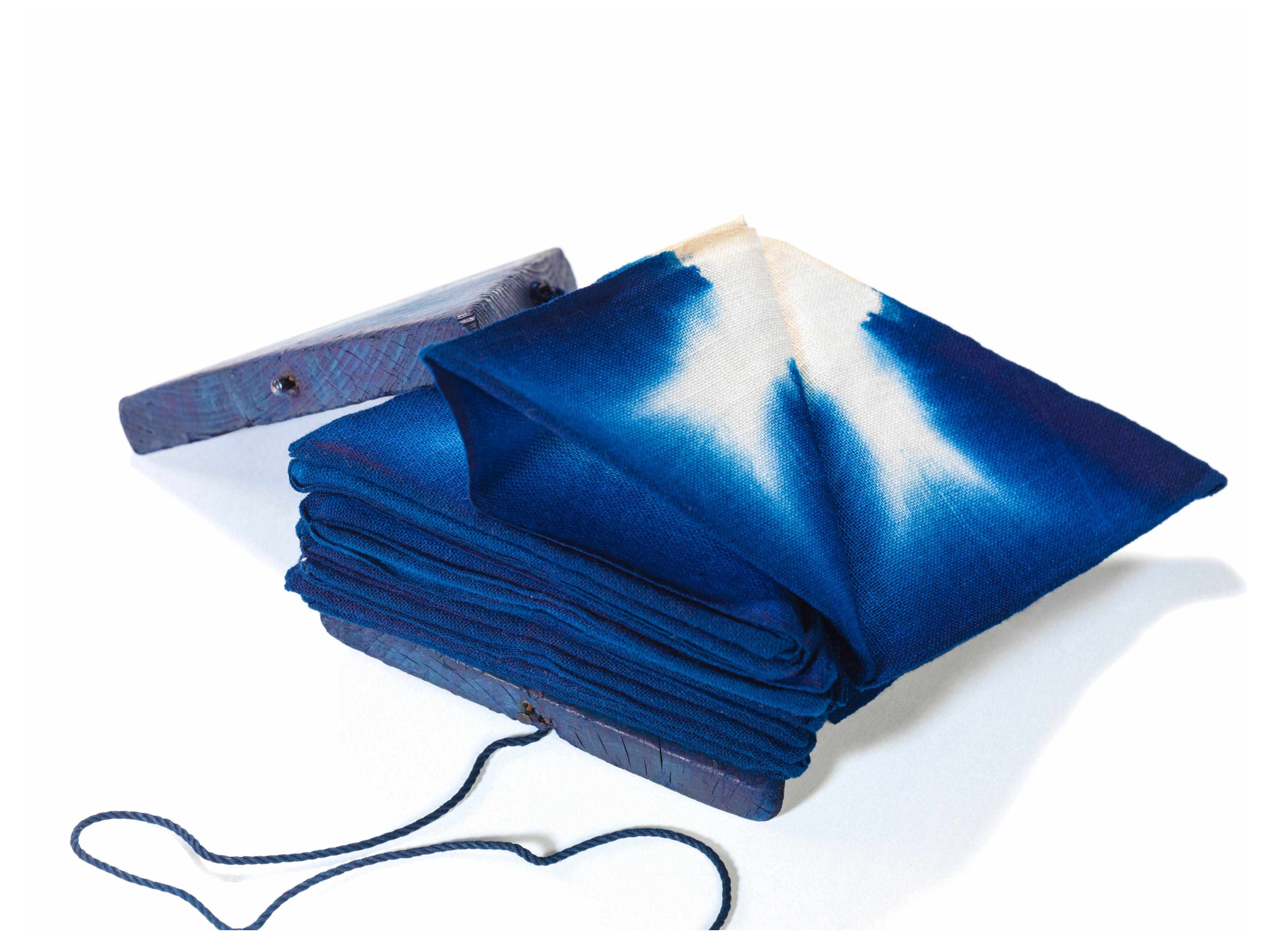
What, amongst other things, makes tie-dye so special is its three-dimensional aspect. Before dyeing, a fabric is moulded into three dimensions. In some cases, this is merely a temporary step, other fabrics retain their three-dimensional form. This is all explained at a dedicated station.
Try It for Yourself
Tie-dye is extensively documented in the MKB’s textile collection; this allows to showcase the various steps in the production process in detail – not only based on the fabrics themselves but also with the aid of the various tools and materials required.
It allows visitors to trace the creation of patterns in every detail and thus gain a new appreciation of the craftsmanship involved – moreover, they can try many of the things out for themselves at a special hands-on station.
By the way, it might be worth visiting the show more than once since individual pieces shown on the catwalk are replaced approximately every six months. This gives visitors a chance to enjoy even more patterns in all their diversity.
Installation by Marie Schumann
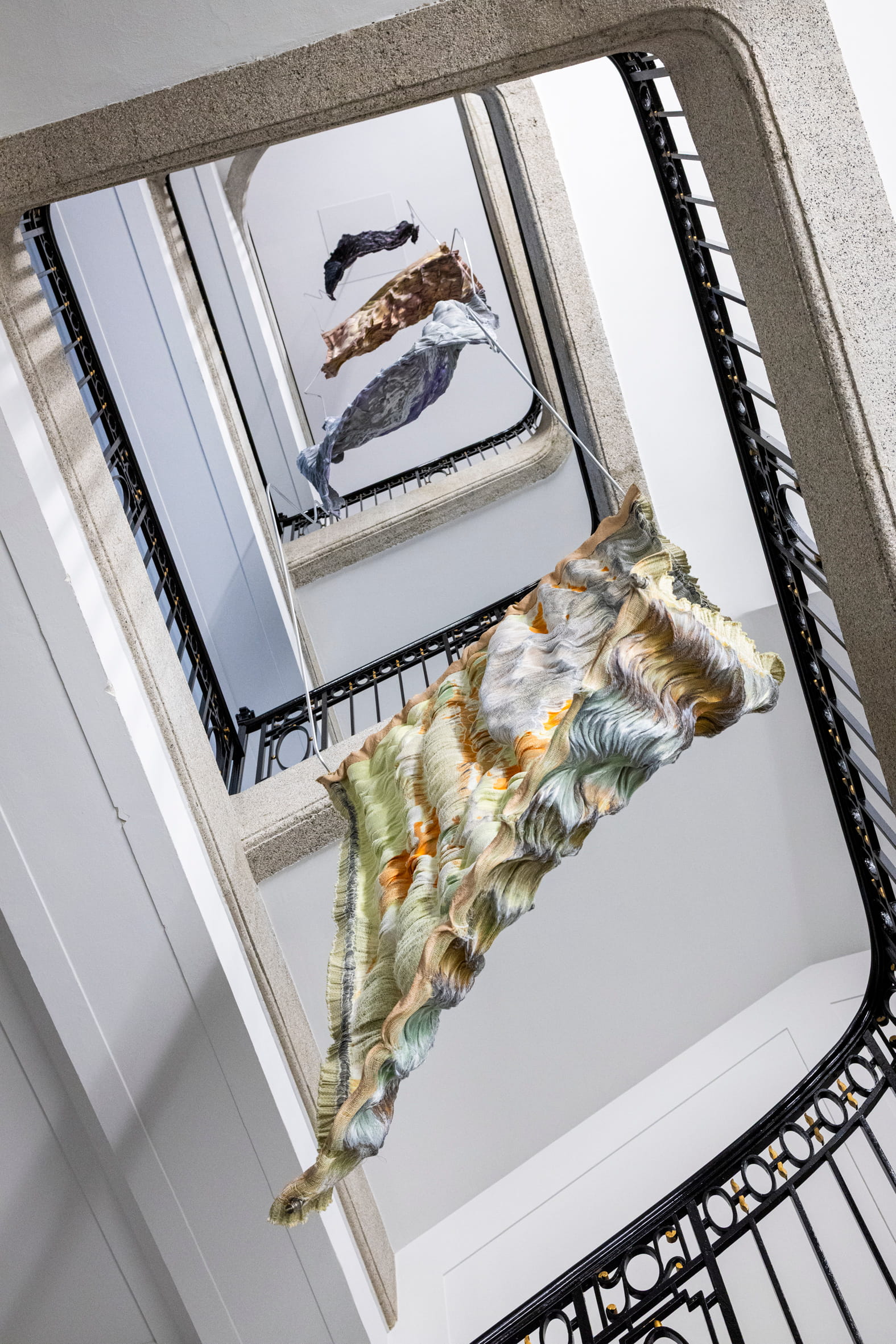
Throughout the duration of the exhibition, the site-specific installation 'Sequences, Screens' by the artist Marie Schumann is on display in the stairwell. As in tie-dye, here too the fabric attains a three-dimensional shape as it unfolds from floor to floor, evolving from flat to sculptural and inviting viewers to experience it from different angles.
In conjunction with the exhibition, the Museum der Kulturen Basel is hosting the 12th International Shibori Symposium. From 25 to 27 September, experts from around the world will gather in Basel to discuss various topics under the theme ‘Textile & Architecture: The Art of Dimensional Transformation.’


.2021-04-20-14-27-54.svg "Fcebook")
.2021-04-20-14-27-41.svg "Instagram")
.2020-11-09-08-57-03.svg)

.4f5b3e434d68c00ce58e02d9385bc876.jpg)